
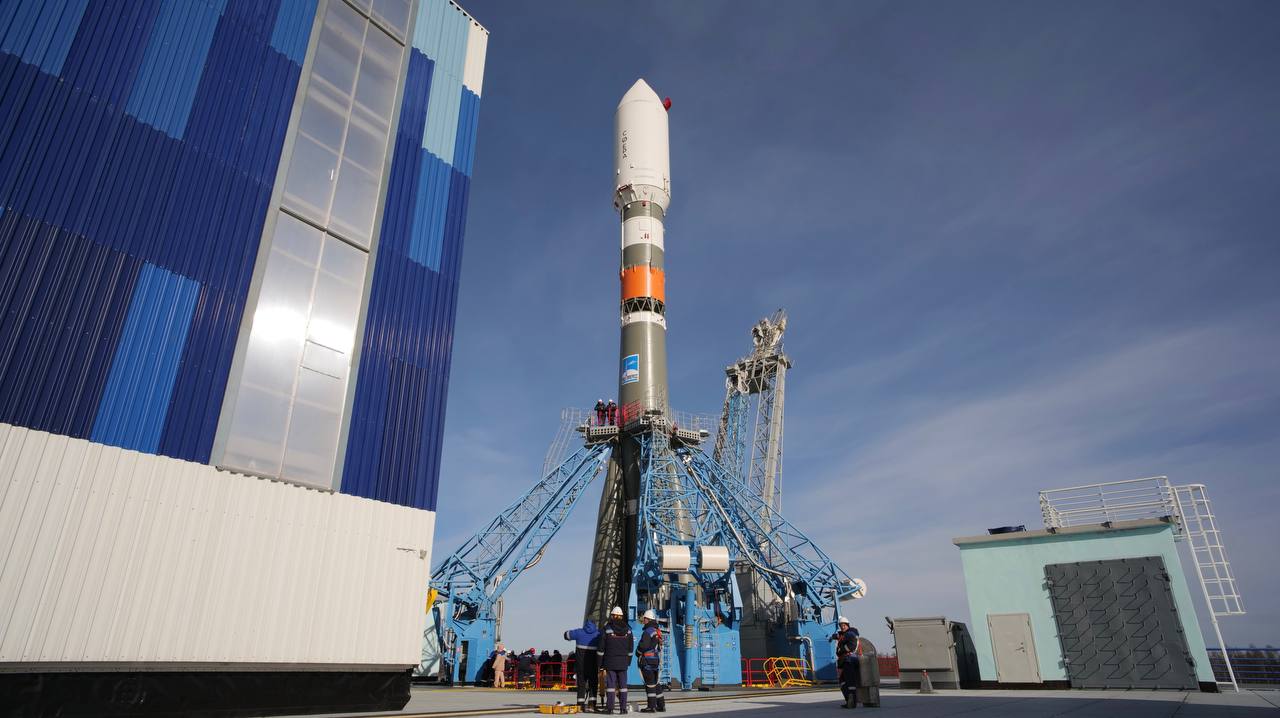
Soyuz 2.1b/Fregat-M | AIST-2T 01 & 02
Russian Federal Space Agency (ROSCOSMOS)
Mission Status
The launch vehicle successfully inserted its payload(s) into the target orbit(s).
Mission Updates
Launch success.
Source →Liftoff.
Source →Official Webcast by Роскосмос ТВ has started
Source →GO for launch.
Source →Added tentative launch time.
Source →Reverted to NET December 28.
Source →Reverted to NET early 2026.
Source →NET December 28.
Source →NET February 2026.
Source →NET December 10.
Source →NET December 15.
Source →NET November 20.
Source →NET October 20.
Source →NET late August.
Source →NET July 31.
Source →NET June 26.
Source →Delayed to 17 March 2025.
Source →Added launch.
Source →Mission Details
A pair of Russian optical Earth observation satellites built by the Progress Rocket Space Centre for obtaining stereo images of the Earth's surface, with maximum resolution of 1.2 m in panchromatic mode and a swath width of 32 km. 50 small satellites will also be launched as ride-share payloads, including 3 from Iran.
Rocket Configuration
Soyuz-2, GRAU index 14A14, is the collective designation for the 21st-century version of the Russian Soyuz rocket. In its basic form, it is a three-stage carrier rocket for placing payloads into low Earth orbit. The first-stage boosters and two core stages feature uprated engines with improved injection systems, compared to the previous versions of the Soyuz. Digital flight control and telemetry systems allow the rocket to be launched from a fixed launch platform, whereas the launch platforms for earlier Soyuz rockets had to be rotated as the rocket could not perform a roll to change its heading in flight.