Latest News

Stay updated with the latest events in spaceflight.

Latest News

SLS/Orion rolls to pad for Artemis 2
SpaceNews

SLS/Orion rolls to pad for Artemis 2

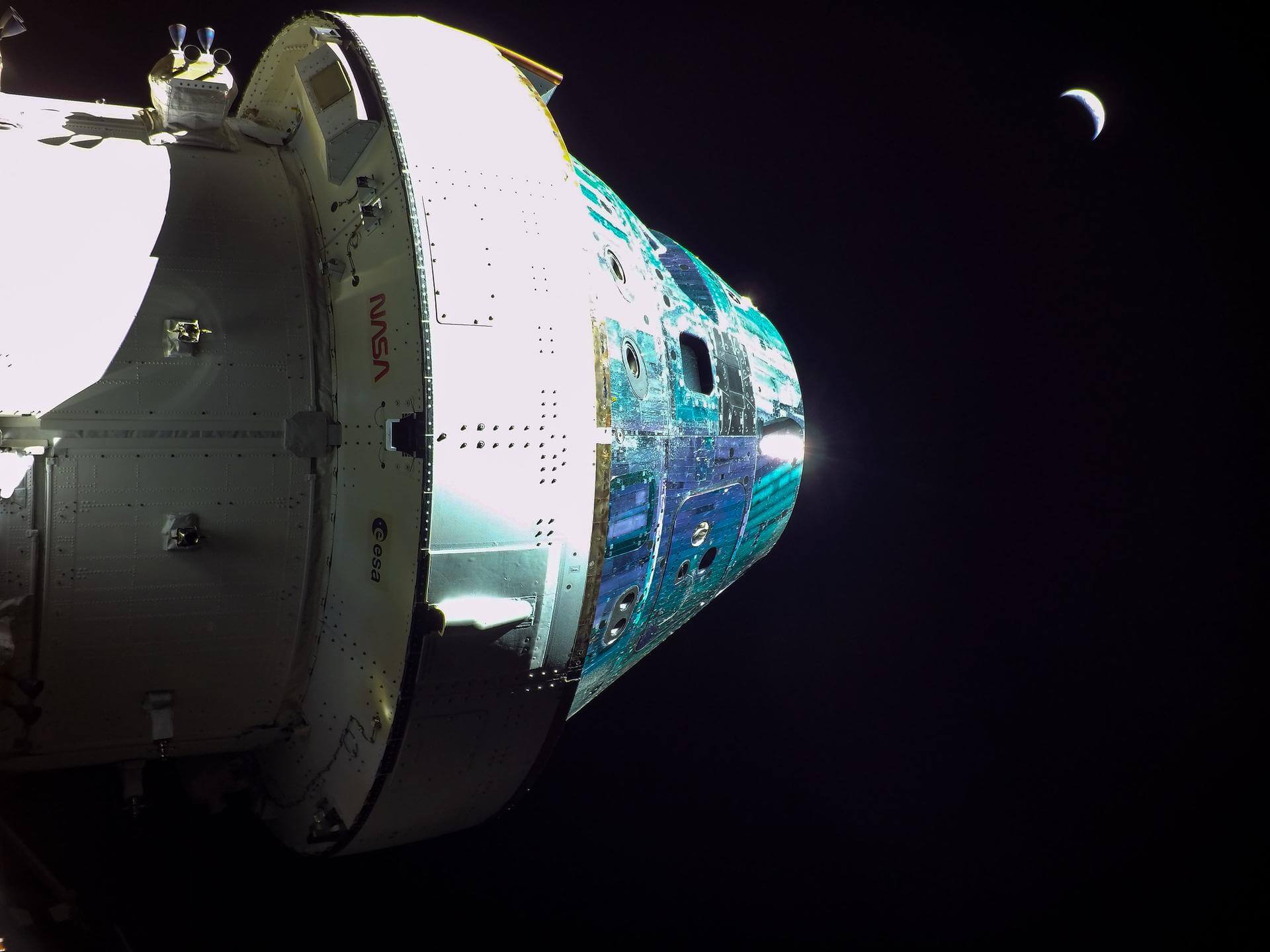
NASA’s Space Launch System and Orion spacecraft rolled to the launch pad for the Artemis 2 mission Jan. 17, though uncertainty remains about when it will be ready to launch. The post SLS/Orion rolls to pad for Artemis 2 appeared first on SpaceNews.

Read More →
Hubble Snaps Stellar Baby Pictures
NASA

Hubble Snaps Stellar Baby Pictures

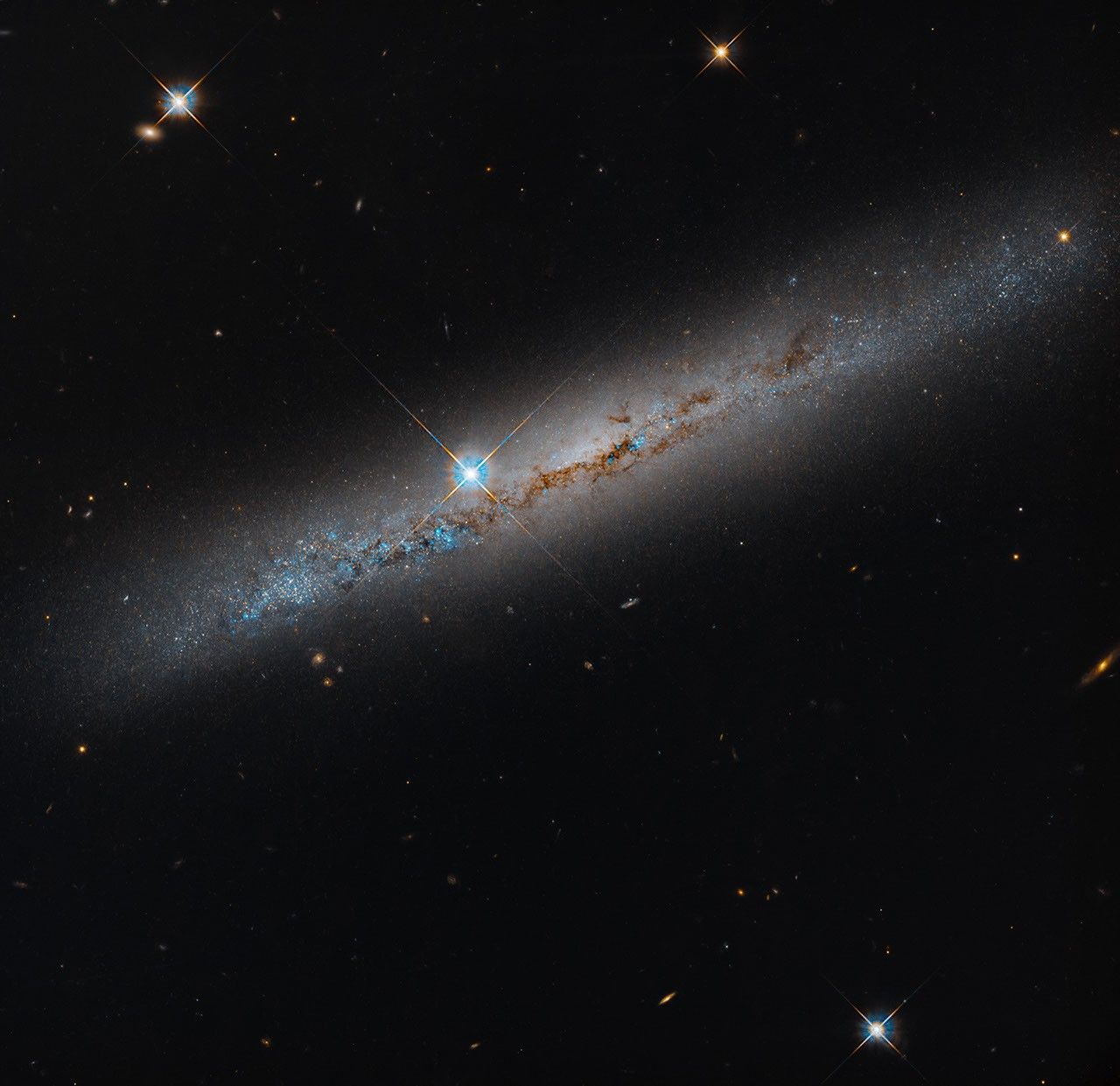
Newly developing stars shrouded in thick dust get their first baby pictures in these images from NASA’s Hubble Space Telescope. Hubble took these infant star snapshots in an effort to learn how massive stars form. Protostars are shrouded in thick dust that blocks light, but Hubble can detect the near-infrared emission that shines through holes […]

Read More →
Arianespace to launch first Ariane 64 rocket on 12 Feb
European Spaceflight

Arianespace to launch first Ariane 64 rocket on 12 Feb

Arianespace has announced that the first flight of its more powerful four-booster Ariane 6 will be launched on 12 February from the Guiana Space Centre in French Guiana. The inaugural flight of the Ariane 6 launch system was conducted in July 2024. In 2025, Arianespace launched four flights of the rocket carrying payloads for ESA, […] The post Arianespace to launch first Ariane 64 rocket on 12 Feb appeared first on European Spaceflight.

Read More →

Upcoming Launches

View All →
Launch Failure

Ceres-2 | Demo Flight

Galactic Energy
Mission Type Test Flight
Orbit Unknown
Pad Launch Area 95A, Jiuquan Satellite Launch Center, People's Republic of China
Launch Successful

Falcon 9 Block 5 | NROL-105

SpaceX
Mission Type Government/Top Secret
Orbit Unknown
Pad Space Launch Complex 4E, Vandenberg SFB, CA, USA
Go for Launch

Falcon 9 Block 5 | Starlink Group 6-100

SpaceX
Mission Type Communications
Orbit Low Earth Orbit
Pad Space Launch Complex 40, Cape Canaveral SFS, FL, USA

Upcoming Events

View All →

Active Space Stations

View All →
International Space Station

International Space Station

Status: Active Orbit: Low Earth Orbit

Founded: 1998-11-20

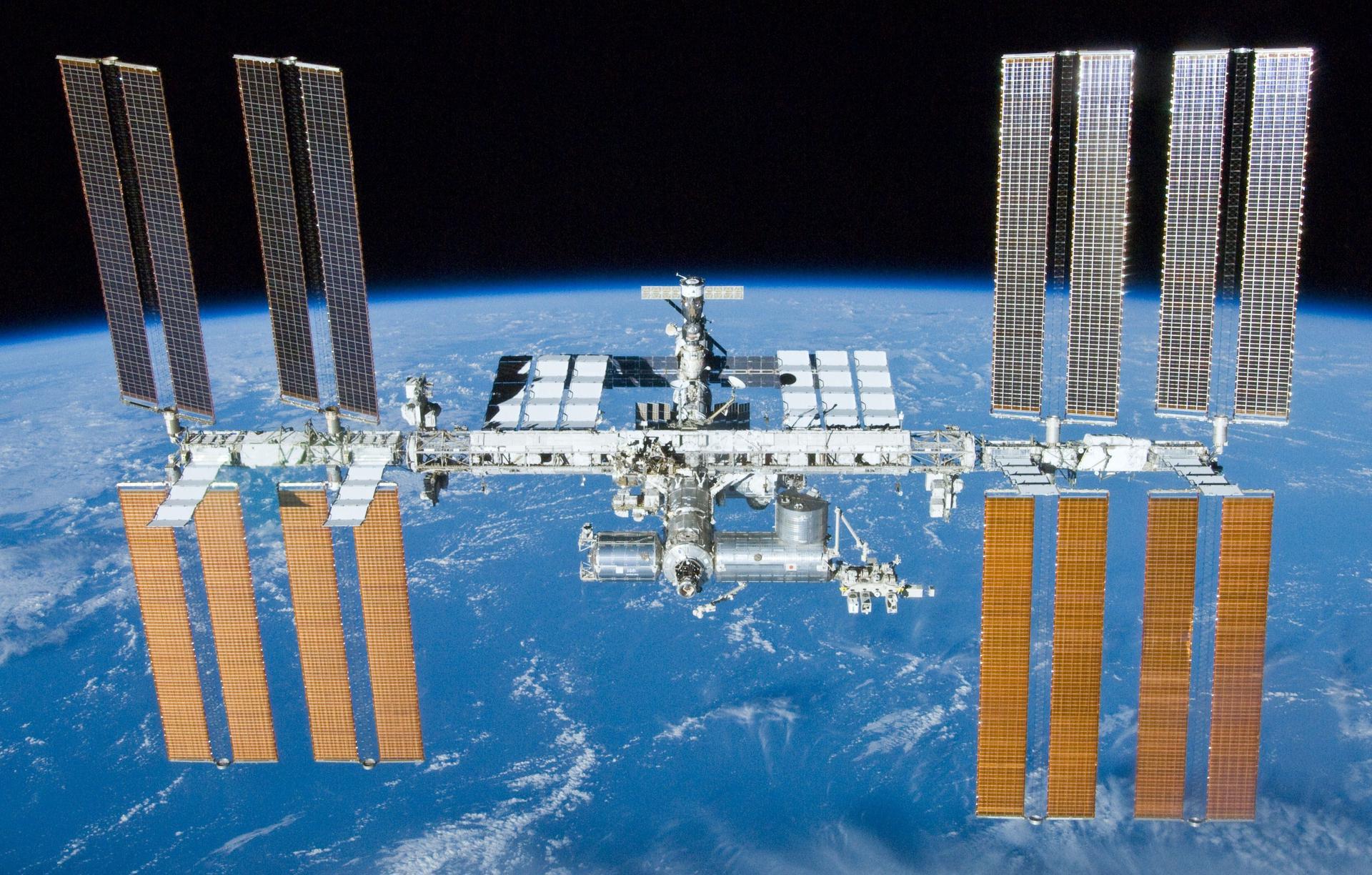
The International Space Station (ISS) is a space station, or a habitable artificial satellite, in low Earth orbit. Its first component was launched into orbit in 1998, with the first long-term residents arriving in November 2000. It has been inhabited continuously since that date. The last pressurised module was fitted in 2011, and an experimental inflatable space habitat was added in 2016. The station is expected to operate until 2030. Development and assembly of the station continues, with several new elements scheduled for launch in 2019. The ISS is the largest human-made body in low Earth orbit and can often be seen with the naked eye from Earth. The ISS consists of pressurised habitation modules, structural trusses, solar arrays, radiators, docking ports, experiment bays and robotic arms. ISS components have been launched by Russian Proton and Soyuz rockets, and American Space Shuttles.

CSAESAJAXANASARFSA

Mir

Mir

Status: De-Orbited Orbit: Low Earth Orbit

Founded: 1986-02-20

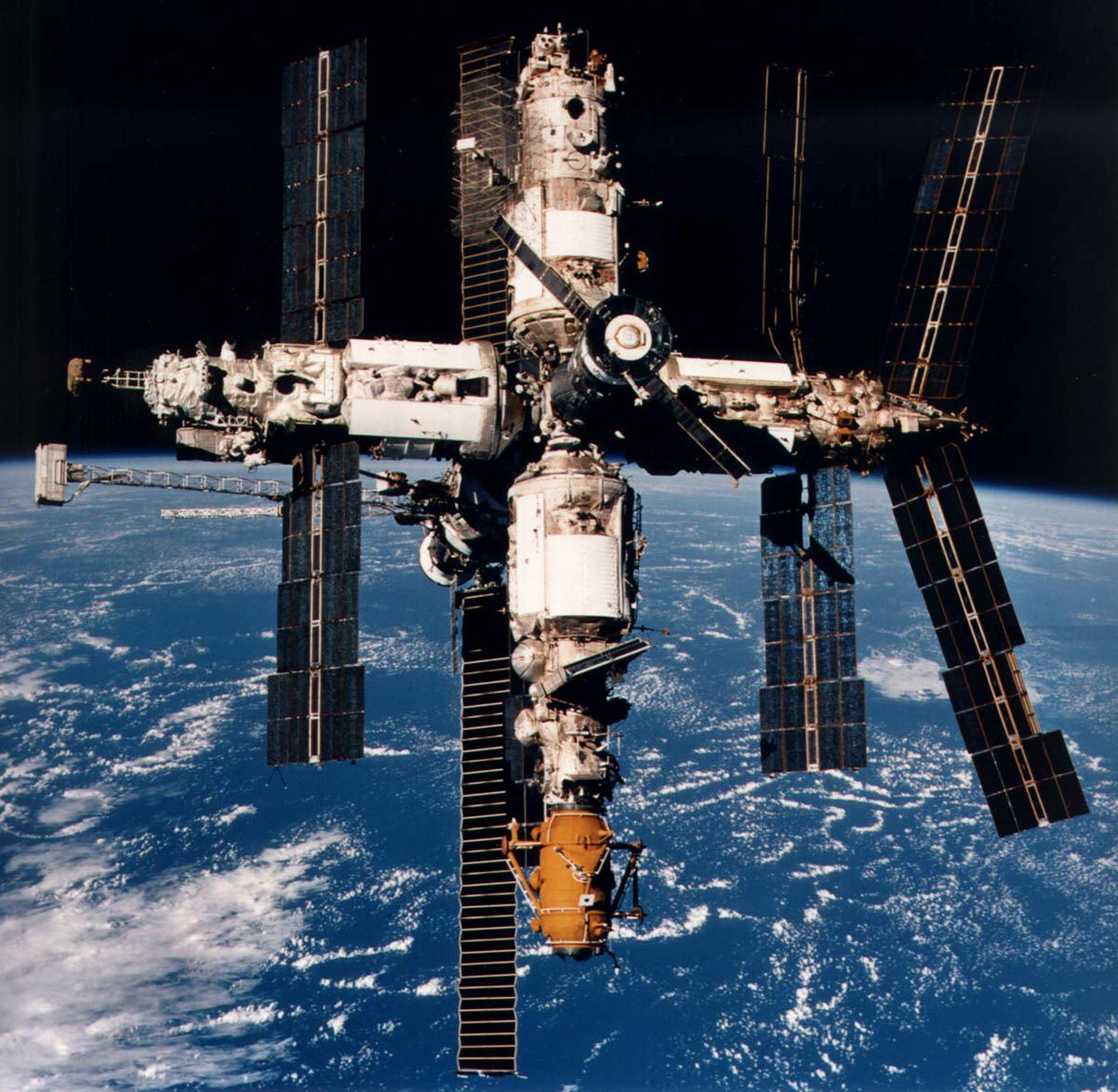
Mir was a space station that operated in low Earth orbit from 1986 to 2001, operated by the Soviet Union and later by Russia. Mir was the first modular space station and was assembled in orbit from 1986 to 1996. The station served as a microgravity research laboratory in which crews conducted experiments in biology, human biology, physics, astronomy, meteorology and spacecraft systems with a goal of developing technologies required for permanent occupation of space.

RFSA
Skylab

Skylab

Status: De-Orbited Orbit: Low Earth Orbit

Founded: 1973-05-14

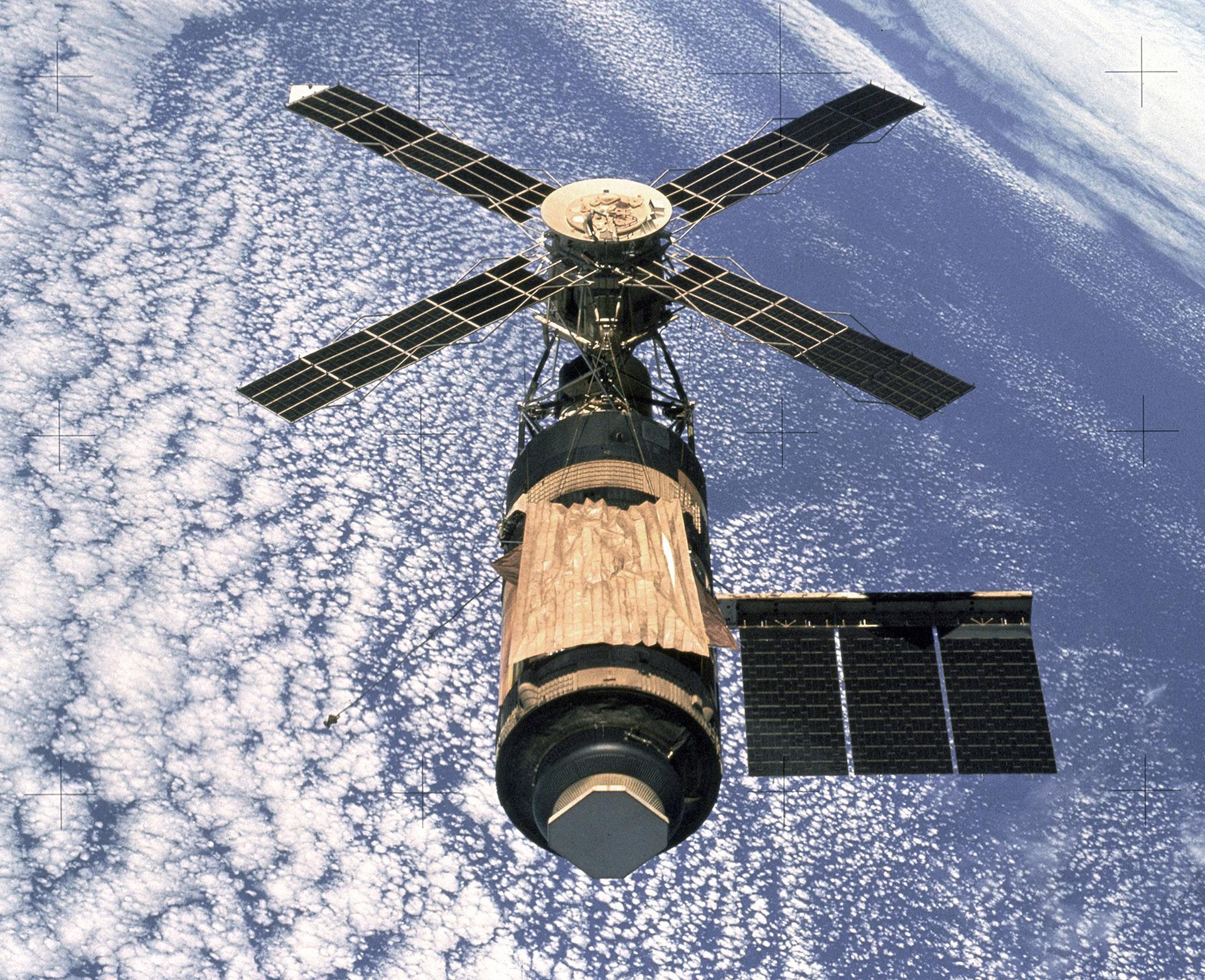
Skylab was a United States space station launched and operated by NASA, and occupied for about 24 weeks between May 1973 and February 1974 – the only space station the U.S. has operated exclusively. In 1979 it fell back to Earth amid huge worldwide media attention. Skylab included a workshop, a solar observatory, and other systems necessary for crew survival and scientific experiments. It was launched unmanned by a modified Saturn V rocket, with a weight of 170,000 pounds (77,000 kg). Lifting Skylab into low earth orbit was the final mission and launch of a Saturn V rocket (famous for carrying the manned Moon landing missions). Three missions delivered three-astronaut crews in the Apollo command and service module (Apollo CSM), launched by the smaller Saturn IB rocket. For the final two manned missions to Skylab, a backup Apollo CSM/Saturn IB was assembled and made ready in case an in-orbit rescue mission was needed, but this backup vehicle was never flown.

NASA