Artemis II Delayed to March
NASA’s Artemis II mission will launch no earlier than March due to several issues that were encountered during a launch rehearsal last night.
Read More →Stay updated with the latest events in spaceflight.
NASA’s Artemis II mission will launch no earlier than March due to several issues that were encountered during a launch rehearsal last night.
Read More →
The French space agency CNES, operator of the Guiana Space Centre in French Guiana, has issued a call for launch operators interested in taking over a portion of its new multi-user commercial launch site following MaiaSpace’s withdrawal. The facility is being built on the grounds of the former Diamant launch site. CNES announced plans to […] The post CNES to Fill Commercial Launch Facility Vacancy Left by MaiaSpace appeared first on European Spaceflight.
Read More →
A full moon is seen shining over NASA’s SLS (Space Launch System) and Orion spacecraft, atop the mobile launcher at Launch Pad 39B at NASA’s Kennedy Space Center in Florida in the early hours of February 1, 2026. The agency concluded a wet dress rehearsal for the agency’s Artemis II test flight early Tuesday morning, […]
Read More →
Following Booster 18’s failure during a pressure test, SpaceX went ahead and set a new… The post Booster 19 Rolls out to Masseys for Cryogenic Proof Testing appeared first on NASASpaceFlight.com.
Read More →
Rapid advances in commercial space, artificial intelligence, and edge computing are transforming what is possible for Earth observation. By pushing more intelligence onboard, missions can move from passively collecting data to actively interpreting and responding to changing surface conditions in near-real time, enabling more targeted observations and dramatically improving the value of data returned to […]
Read More →
Space activities are unlike any others. They interact not just with Earth, but with three interconnected environments: Earth, Earth’s orbit, and the Moon and deep space. On Earth, we aim to reduce the space sector’s environmental impacts while maximising the societal and environmental benefits of our missions. In orbit, we manage space debris and collision risks to maintain safe and secure operations. For the Moon and deep space, we are laying the foundations to minimise the impact of our missions on and around other celestial bodies.
Read More →
Wet Dress Rehearsal
The Space Launch System (SLS) rocket for the Artemis II mission will perform a Wet Dress Rehearsal to demonstrate the ability to load more than 700,000 gallons of cryogenic propellants into the rocket, conduct a launch countdown, and practice safely removing propellant from the rocket without astronauts inside the spacecraft.
Press Event
Following a fueling test of NASA’s SLS (Space Launch System) rocket at the launch pad for the Artemis II Moon mission, leaders will discuss initial results during a news conference. Participants in the news conference include: - NASA Associate Administrator Amit Kshatriya - Lori Glaze, acting associate administrator for the Exploration Systems Development Mission Directorate - John Honeycutt, chair, Artemis II Mission Management Team - Representative, Exploration Ground Systems Program
Docking
The Crew-12 Crew Dragon will dock autonomously to the International Space Station, carrying four astronauts to the International Space Station.
Founded: 1998-11-20
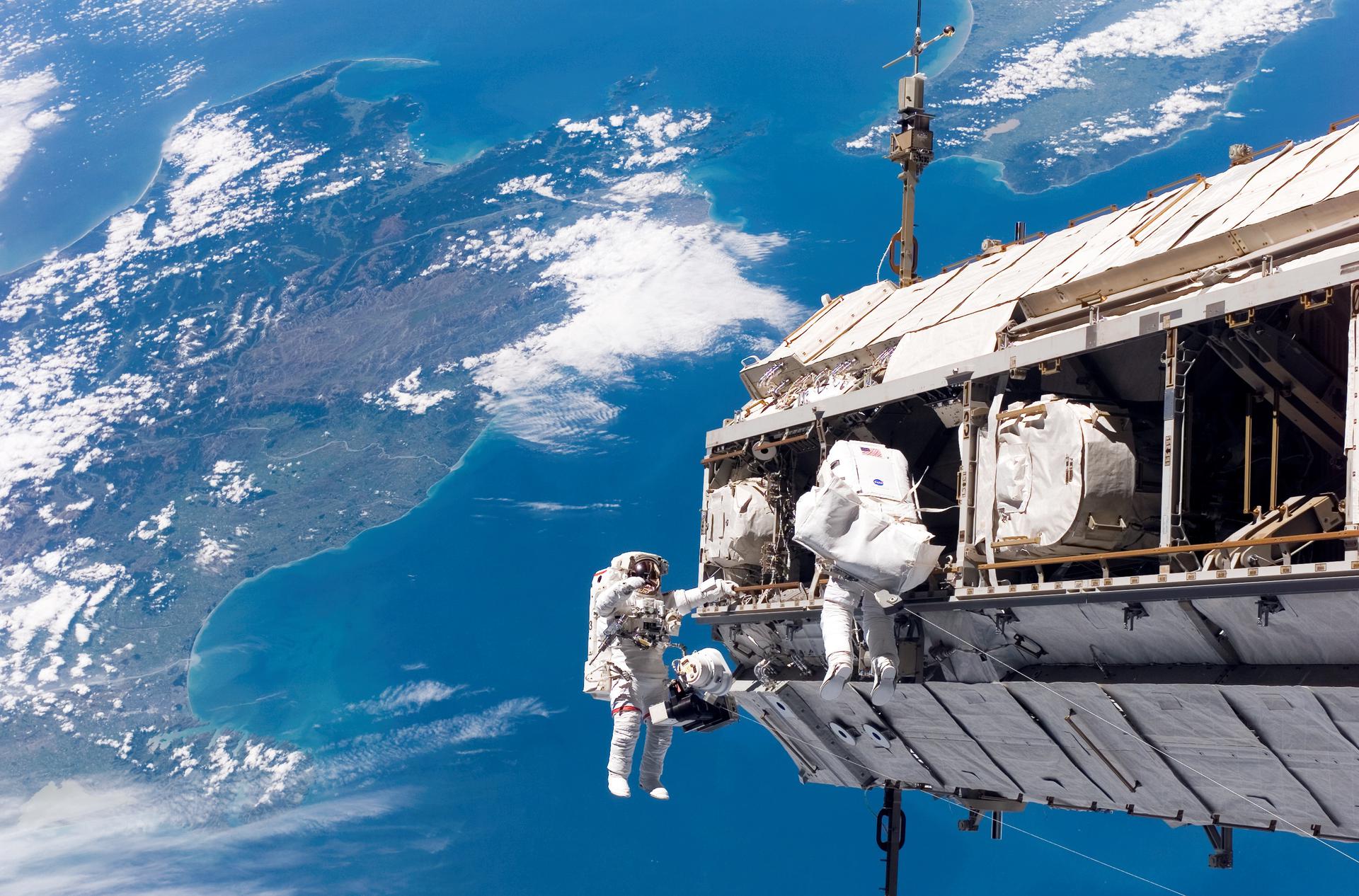
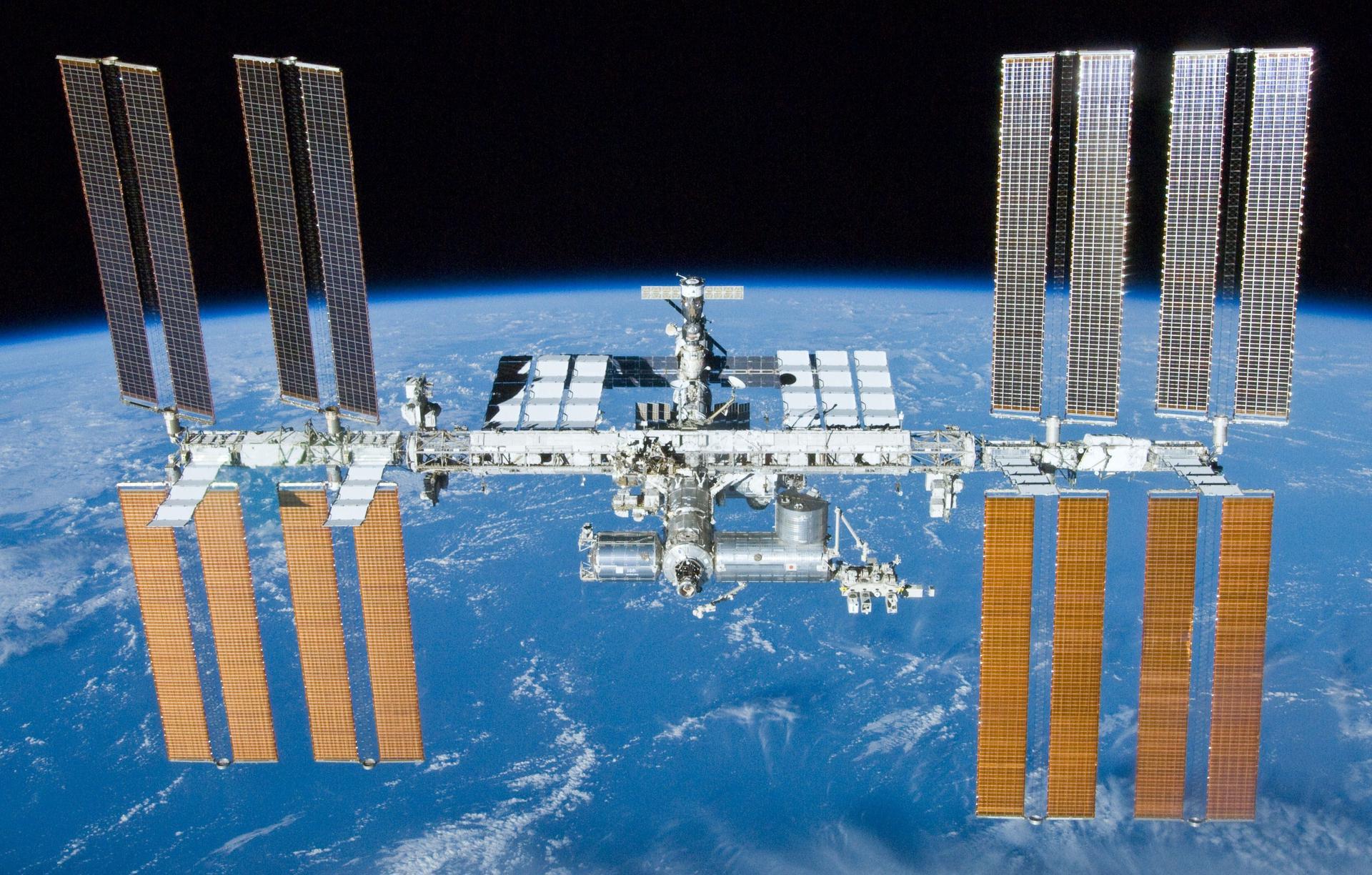
The International Space Station (ISS) is a space station, or a habitable artificial satellite, in low Earth orbit. Its first component was launched into orbit in 1998, with the first long-term residents arriving in November 2000. It has been inhabited continuously since that date. The last pressurised module was fitted in 2011, and an experimental inflatable space habitat was added in 2016. The station is expected to operate until 2030. Development and assembly of the station continues, with several new elements scheduled for launch in 2019. The ISS is the largest human-made body in low Earth orbit and can often be seen with the naked eye from Earth. The ISS consists of pressurised habitation modules, structural trusses, solar arrays, radiators, docking ports, experiment bays and robotic arms. ISS components have been launched by Russian Proton and Soyuz rockets, and American Space Shuttles.
Founded: 1986-02-20
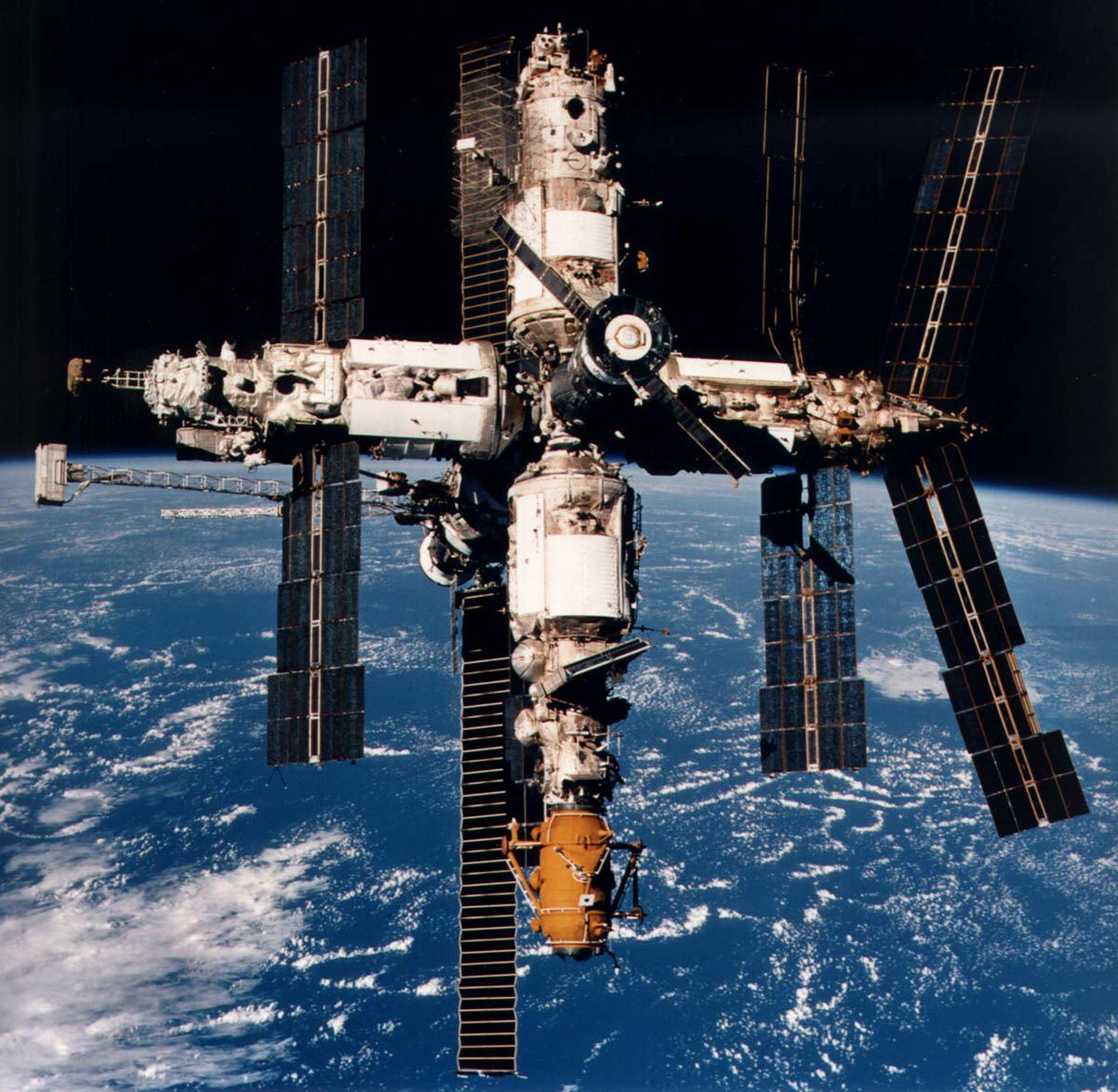
Mir was a space station that operated in low Earth orbit from 1986 to 2001, operated by the Soviet Union and later by Russia. Mir was the first modular space station and was assembled in orbit from 1986 to 1996. The station served as a microgravity research laboratory in which crews conducted experiments in biology, human biology, physics, astronomy, meteorology and spacecraft systems with a goal of developing technologies required for permanent occupation of space.
Founded: 1973-05-14
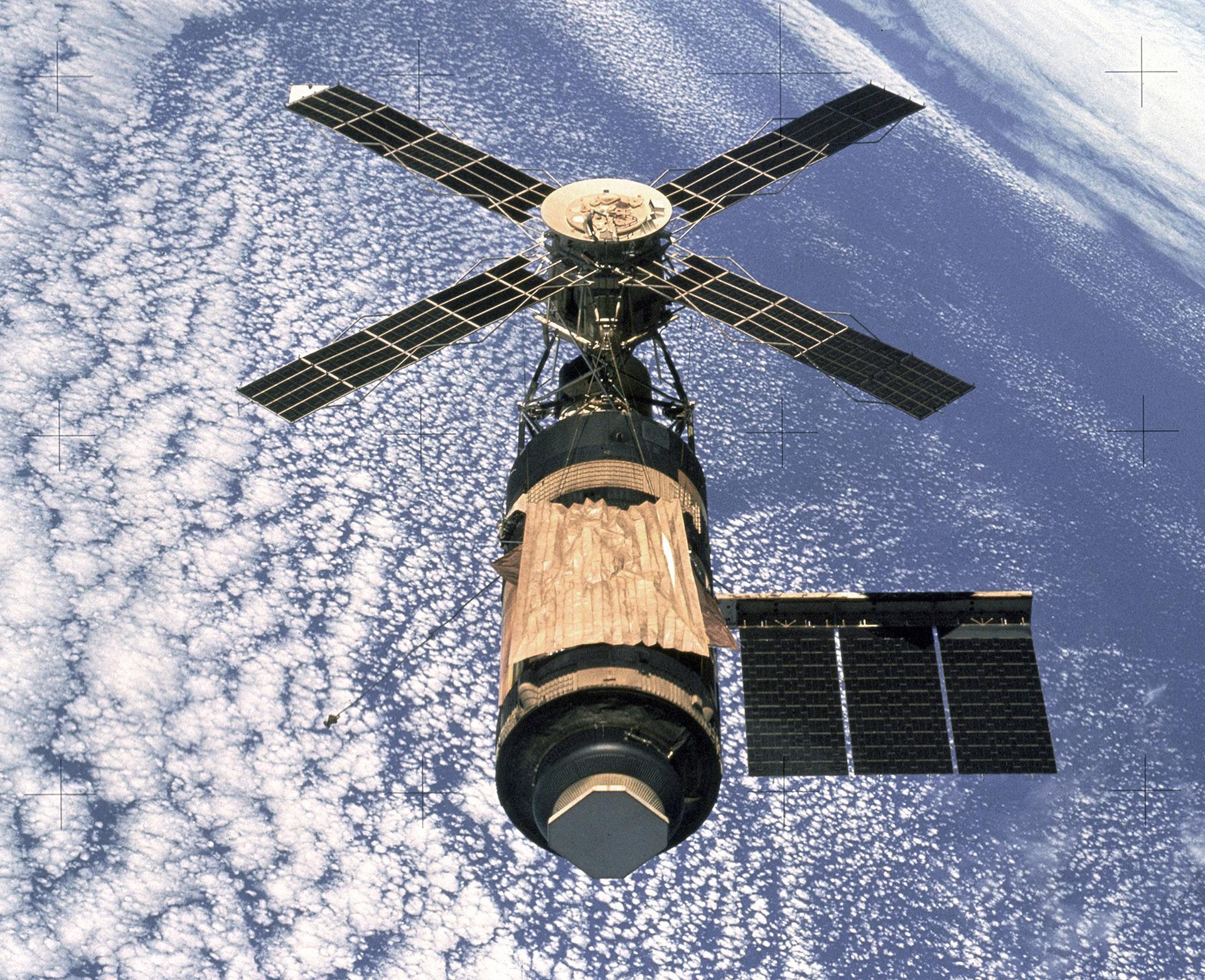
Skylab was a United States space station launched and operated by NASA, and occupied for about 24 weeks between May 1973 and February 1974 – the only space station the U.S. has operated exclusively. In 1979 it fell back to Earth amid huge worldwide media attention. Skylab included a workshop, a solar observatory, and other systems necessary for crew survival and scientific experiments. It was launched unmanned by a modified Saturn V rocket, with a weight of 170,000 pounds (77,000 kg). Lifting Skylab into low earth orbit was the final mission and launch of a Saturn V rocket (famous for carrying the manned Moon landing missions). Three missions delivered three-astronaut crews in the Apollo command and service module (Apollo CSM), launched by the smaller Saturn IB rocket. For the final two manned missions to Skylab, a backup Apollo CSM/Saturn IB was assembled and made ready in case an in-orbit rescue mission was needed, but this backup vehicle was never flown.